If you’re trying to remove a permanent restraining order in Colorado, the process can be difficult to navigate. These court orders do not expire on their own. To get a permanent restraining order removed, you must file a motion and attend a court hearing where a judge decides whether the order is still necessary.
Courts focus on the safety of the protected party, so you need strong evidence to support your request. Judges often take a cautious approach, especially in cases involving domestic violenceor ongoing conflict. Working with an attorney can help you prepare your case and avoid mistakes that could delay or weaken your request.
To understand how removal works, you first need to understand how these orders are issued and enforced under Colorado law.
What Is a Permanent Restraining Order in Colorado
A permanent restraining order, often called a permanent protection order, is a type of civil protection order issued under Colorado law. This court order helps protect individuals from harm, harassment, stalking, or abuse.
A permanent restraining order places strict limits on the restrained person (respondent) and protects the protected person from further contact.
Key characteristics include:
- Long-term restriction:Issued after a protection order hearing where the court finds evidence of harm or imminent danger
- No contact:The restrained person cannot contact the protected person, including phone calls, messages, or online communication
- Scope of protection:Applies to domestic violence, domestic abuse, harassment, stalking, or sexual violence
- Legal consequences:Violations can lead to criminal charges, a criminal offense, or jail time
- Issuance process:A judge may first issue a temporary protection order (TPO) or temporary restraining order, followed by a hearing within about 14 days
- Duration:The order remains in effect indefinitely unless the court modifies or dismisses it
Each case depends on the facts presented and how the court finds risk to the protected party.
How Long Is a Permanent Restraining Order in Colorado
A permanent restraining order in Colorado usually lasts indefinitely. It does not expire unless the court removes or modifies it.
You can request removal, or the protected party can ask the court to dismiss it. Judges review these requests carefully to prevent future harm.
Some terms may change over time. Cases involving minor children, parenting time, or child custody may be reviewed under Colorado law. Courts may adjust these terms while keeping the rest of the order in place.
Protection Order Process in Colorado
Restraining orders, also known as civil protection orders, are common in cases involving domestic violence, harassment, stalking, or sexual assault. You must show that you face harm, threats, or imminent danger.
The process generally follows these steps:
Step 1: File a Petition
You must file a petition with a county court or civil court. A filing fee may apply, though courts often waive it in cases involving domestic violence.
Step 2: Temporary Protection Order (TPO)
A judge may issue a temporary civil protection order without the other party present. This is often called a temporary restraining order. Law enforcement will serve the order to the restrained person.
Step 3: Protection Order Hearing
The court schedules a protection order hearing, usually within 14 days. You and the respondent can present evidence. The judge decides whether a permanent order is necessary.
Judges focus on whether the risk still exists. They review testimony, prior incidents, and any evidence of ongoing behavior.
Step 4: Permanent Restraining Order Issued
If granted, the order becomes a long-term court order that restricts the restrained party.
What a Restraining Order Prohibits
A restraining order protects the protected person by limiting contact and behavior.
Common restrictions include:
- No contact, including phone calls, messages, email, or social media
- No harassment, threats, or intimidation
- No physical contact, abuse, or sexual contact
- Stay-away requirementsfrom home, workplace, or school
- No stalkingor surveillance
- No interferencewith property, pets, or safety
These restrictions apply in everyday situations. For example, asking a friend to pass a message, sending gifts, or commenting on social media can still count as contact.
Violating a restraining order can lead to criminal charges, a misdemeanor, or jail time.
How to Remove a Permanent Restraining Order
Removing a permanent restraining order in Colorado requires court approval. You must show that the order is no longer necessary and that no risk of harm remains.
Both the protected party and the restrained person can request removal. Courts often give more weight to requests from the protected party, but judges still review the facts before making a decision.
The process includes:
Step 1: Seek Legal Representation
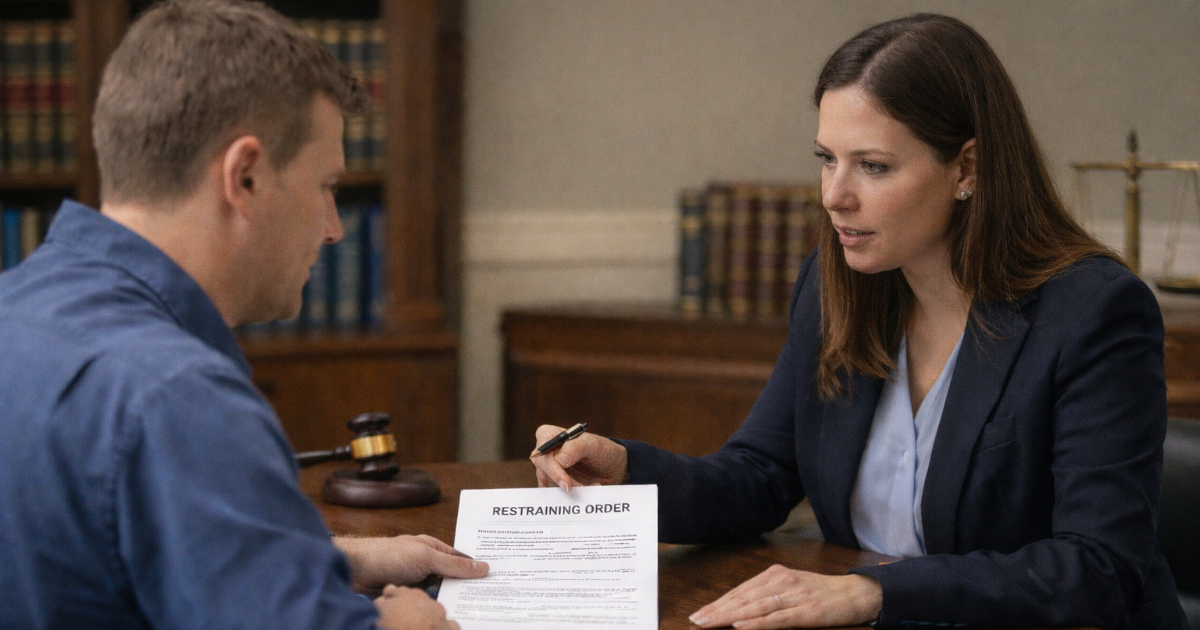
You should work with an attorney. Legal representation helps you prepare evidence, avoid procedural mistakes, and present your case clearly.
Step 2: File a Motion
You must file a motion with the same court that issued the order. Explain why the order should be dismissed and what has changed.
Step 3: Serve the Motion
You must serve the motion to the protected party.
Step 4: Court Hearing
Both sides present evidence. The judge evaluates whether the situation has changed and whether the protected person remains at risk.
Step 5: Judge’s Decision
The court may keep the order in place, modify it, or dismiss it.
Legal Requirements to Remove a Restraining Order in Colorado
Requests follow Colorado Revised Statute (C.R.S.) 13-14-108, which governs modification and dismissal of a permanent civil protection order.
You may need to complete a background check through the Colorado Bureau of Investigation and the FBI. You must pay for this check.
If the court does not receive the results, the judge may refuse to review your request.
Why Is It Difficult to Remove a Protection Order
Courts focus on safety. You must prove that the risk of harm or emotional harm no longer exists.
The court will review:
- Change in circumstances:Your situation must be different from when the order was issued
- Compliance:No violations or new incidents
- Nature of the case:Whether the case involved an act of domestic violence, harassment, or stalking
- Ongoing risk:Whether removal creates risk to the protected party
Courts act cautiously. Removing an order too early can lead to further harm, so judges often deny requests when uncertainty remains.
Legal Consequences of a Protection Order
A permanent restraining order can affect your life in several ways.
For the restrained person:
- Appears on a background check
- Impacts employment and housing opportunities
- May restrict firearm rights
- Violations can lead to a criminal case, arrest, or jail time
A restraining order can also affect your reputation. Employers, landlords, and licensing boards may review public records when making decisions.
For the protected person:
- Provides legal protection
- May require changes to daily routines to maintain safety
You must follow all terms of the order. Violations can lead to serious legal consequences.
Contact a Colorado Defense Lawyer
M. Colin Bresee is a Colorado criminal defense attorney based in Denver with decades of experience. His law firm handles criminal cases and restraining order matters across Colorado.
When you work with Colin, you can expect:
- Direct access to your attorney:Your case is handled by Colin, not passed off to a junior lawyer
- Experience on both sides of the courtroom:Insight into how prosecutors and judges evaluate cases
- Focused legal strategy:A plan built around the facts of your situation, not a one-size-fits-all approach
- Clear guidance:Straightforward advice so you understand your options and next steps
Call (303) 747-4032 to schedule a free consultation.
Disclaimer: This content is for informational purposes only and does not constitute legal advice. You should speak with an attorney about your specific situation.