Being sentenced to probation or being released early on parole are favorable outcomes for your criminal case. However, probation and parole come with conditions.
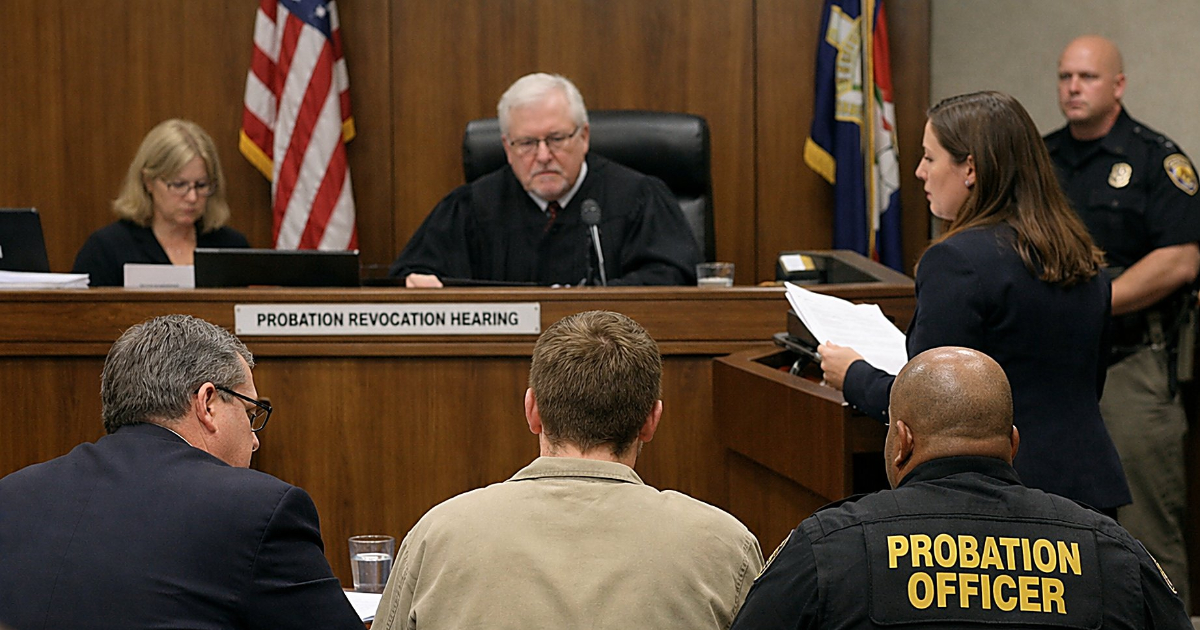
If you’re accused of violating those conditions, such as failing a drug test, not showing up to required check-ins, not completing required programs, or committing new crimes like domestic violence or DUI, you will have to face a revocation hearing.
If you don’t win your revocation hearing, the court can impose new conditions or revoke your probation or parole, opting for a prison sentence. Your probation or parole is worth defending, and a criminal defense attorney can help you build a successful defense for your revocation hearing.
At the Law Offices of M. Colin Bresee, we believe that everyone deserves a robust defense against all accusations, which is why we offer free consultations and payment plans.
Defense Strategies That May Help You Avoid Revocation
Before building your defense, it’s important to understand that Colorado revocation hearings have a different legal standard than criminal trials. The burden of proof is still on the state, but it’s different.
In a criminal trial, the prosecution must prove your guilt beyond a reasonable doubt. In a revocation hearing, the prosecution must simply prove that the preponderance of the evidence suggests probation violations or parole violations. This lower standard demands a more vigorous defense to protect you from any accusation.
Another important difference in parole or probation revocation hearings is that you don’t have the right to a jury trial. Your defense will have to be convincing to a judge, which means assembling a strong evidence-based defense. Evidence that is normally inadmissible in criminal hearings can also be used in parole or probation violation hearings, making it even harder to defend yourself.
You do have other rights during your revocation hearing. You have the right to due process, which includes the right to have legal representation. You are also given a chance to challenge the allegations, cross-examine witnesses, and present evidence. Since hearsay is admissible in revocation hearings, you need to be prepared to rebut any claims.
Challenging the Allegations
An effective defense in your revocation hearing is showing that the alleged violation never occurred. Sometimes, probation or parole violation accusations are based on inaccurate or incomplete reports. The reports might contain recordkeeping errors, such as failing to record that you checked in. There might be confusion between you and someone with a similar name who was arrested for a misdemeanor. Drug tests might not have been handled properly, or the results recorded inaccurately.
Other times, the alleged parole or probation violation might be based simply on hearsay. Sometimes, cross-examination will reveal contradictions in the testimony or reveal that the source is untrustworthy or unreliable.
In order to successfully challenge the allegations, you will need significant supporting evidence. If it comes down to just putting the word of a probationer or parolee against the record or word of the parole or probation officer, you will lose.
Presenting Mitigating Evidence
If you can’t disprove allegations, sometimes you can put them in a context that will make a judge sympathetic and willing to continue your probation or parole. You can do this by showing that you violated the court’s terms only because of an emergency, illness, or misunderstanding. Judges are largely focused on evidence, but they can also be compassionate, especially when the terms of your probation or parole are particularly difficult or challenging. It also helps if you have testimony that shows you are committed to being a good citizen.
These arguments work best when you have a strong record of compliance with most of the terms of your probation or parole. If there are numerous alleged violations, it’s hard to win a judge’s sympathy.
Supporting Evidence for Your Defense
The best evidence for your defense is the documentation from your probation or parole program. If the records show that you are actually attending the court-ordered programs, performing community service, have clean drug tests, are complying with work requirements, and otherwise meeting the court-required terms, then you are more likely to win your revocation hearing. Looking at the records from programs can show if recordkeeping anomalies explain alleged violations. Police records can also highlight misidentification that leads to false allegations.
When you are trying to win the sympathy of the judge or show that you are generally committed to the court’s terms, witness testimony can help. If your employers, counselors, or family members say that you are trying to comply with the court’s terms, it can help the judge better understand your situation. Witness testimony can also help establish that you were not at a place where an alleged violation occurred. For example, if you were accused of associating with previous confederates but your employer can prove you were at work during that time, it can help your defense.
Always maintain your texts, voicemails, and other communications when you are on probation or parole. These can be vital pieces of evidence to contradict false allegations of probation violations.
Possible Outcomes of a Revocation Hearing
There are three possible outcomes for your revocation hearing:
- Supervision continues: The judge finds insufficient evidence to modify or revoke probation or parole.
- Modified conditions: The judge might modify your conditions of probation or parole. Often, this means imposing stricter conditions or extending the probation period or parole. However, in some cases, a judge might decide that probation or parole conditions are too strict for your situation and design conditions that are a better match.
- Revocation and sentencing: A judge can decide that you violated the terms of your probation or parole. This can mean sending you (back) to prison or imposing any other sentence that is appropriate for your original crime.
Favorable outcomes for your revocation hearing depend on assembling a strong defense.
Protect Your Rights During a Revocation Hearing
The consequences of your revocation hearing can be as serious as your initial trial, including jail time, fines, and more. But the odds can feel worse at your revocation hearing. With a case built on evidence that would never be allowed in court and such a low bar for proof, it can seem impossible to defend yourself.
This is why you need the help of an experienced criminal defense lawyer, someone who knows how to challenge evidence, respectfully dispute testimony, and assert your character to convince a judge that you still deserve probation or parole.
Denver criminal defense attorney M. Colin Bresee has experience helping people at all phases of a criminal charge: from your initial trial to every revocation hearing, he has likely helped someone in your exact situation. Let him turn his experience to your advantage. Please contact the Law Offices of M. Colin Bresee for a free consultation today.
Disclaimer: Past results do not predict future performance. Neither this page nor any other on the website constitutes legal advice and does not establish an attorney-client relationship.