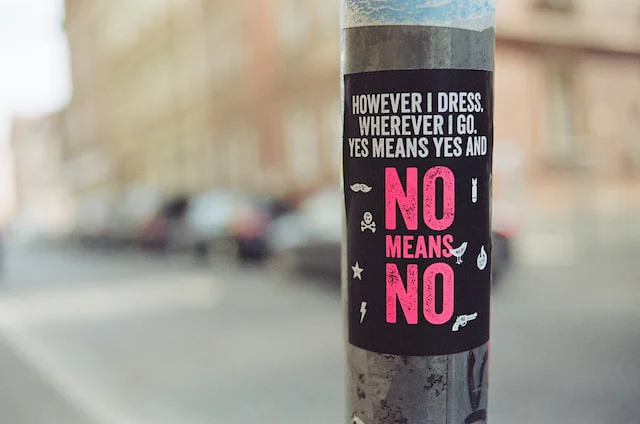
Sex offenders in Colorado are individuals convicted of sex crimes who are legally required to register. Any adult convicted of a felony sex crime becomes publicly searchable through Colorado’s Sex Offender Tracking and Registration System (SOTAR). While most offenders are required to register annually, certain cases mandate more frequent registration, with some individuals needing to update their information every three months.
Learn how those charged with a sex offense are treated and what they can expect from the Colorado judicial system.
Registration Requirements
In Colorado, certain individuals convicted of sexual offenses are required by law to register as sex offenders. This registration process ensures that law enforcement agencies and the public are aware of these individuals’ identities and whereabouts. These guidelines will help you navigate the registration process.
Who Must Register?
Article 22 of Title 16, the Colorado Offender Registration Act, requires any person to register if they:
- Were convicted in the state of Colorado of an unlawful sexual offense, as defined in section 18-3-411 C.R.S., enticement of a child as described in section 18-3-305 C.R.S., or internet luring of a child as described in section 18-3-306.
- Were convicted in another state or jurisdiction of an offense that, if committed in Colorado, would constitute an unlawful sexual offense.
- Were released from the Department of Corrections of this state or any other state, having served a sentence for an unlawful sexual offense.
Sex Offenses
Crimes that require sex offender registration include any person convicted of:
- Any unlawful sexual offense
- Enticement of a child
- Sexual assault
- Sexual assault when the child is less than fifteen years of age
- Sexual assault in the first degree
- Sexual assault in the first degree when the child is less than fifteen years of age
- Sexual assault in the second degree
- Unlawful sexual contact if the victim is less than fifteen years of age
- Sexual assault in the third degree
- Sexual assault in the third degree when the child is less than fifteen years of age
- Sexual assault on a child
- Sexual assault on a child by one in a position of trust
- Aggravated incest
- Trafficking in children
- Sexual exploitation of a child
- Procurement of a child for sexual exploitation
- Indecent exposure
- Soliciting for child prostitution
- Pandering of a child
- Procurement of a child
- Keeping a place of child prostitution
- Pimping of a child
- Inducement of child prostitution
- Patronizing a prostituted child
- Class 4 felony internet luring of a child
- Internet exploitation of a child
- Criminal attempt, conspiracy, or solicitation to commit any of these acts
Who Must Register Quarterly?
The following individuals are required to register as a sex offender every three months in Colorado:
- Sexually violent predators
- Individuals convicted out of state, if their conviction would require quarterly registration in Colorado
- Individuals convicted as an adult in Colorado of:
- Felony sexual assault
- Sexual assault on a child
- Sexual assault on a child by one in a position of trust
- Sexual assault on a child by a psychotherapist
- Incest
- Aggravated incest
What Information is Needed to Register?
Registering as a sex offender is a comprehensive process requiring the submission of personal information to a statewide registry. The following details are entered into an electronic database accessible to law enforcement for investigative purposes. The requested information includes, but is not limited to:
- All names (legal names, nicknames, or other aliases)
- Date of birth
- All addresses
- Place of employment; if enrolled in any educational institution, the location of that institution
- All addresses and locations where the person works, attends classes, or participates in other activities
- Individuals convicted of child sex crimes must also provide their email addresses, instant messaging identities, and any other internet aliases.
Registering as a Sex Offender in Colorado
Individuals who are convicted of unlawful sexual behavior are required to follow all orders by the court, parole, and probation. This includes, but is not limited to, initial registration as well as re-registration.
Registration must occur within 5 business days of being notified to submit your sex offender registrationform. If a person required to register is sentenced to probation, as soon as possible following the sentencing, the probation department will require a signature on documentation letting you know that you have to register. This will be proof that you know you have to register as well as re-register. If you fail to register, this document will be evidence that you knew you had to register and you failed to do so. Probation will then communicate all of your information to the Colorado Bureau of Investigation (CBI).
Publicly Available Registered Sex Offender Information
The CBI website reveals the following information about convicted sex offenders:
- Name
- Birthday
- Residential address (including county)
- Vehicles
- Custody status
- Headshot
- Gender
- Race
- Height
- Weight
- Hair color
- Eye color
- Scars, marks, and tattoos
- Crimes and conviction dates
- If they are sexually violent predators
- Modus operandi information (details of predatory habits), if known
- If they’ve ever failed to register as a sex offender
This information might also be posted by local law enforcement agencies on their websites.
Note that the following offenders are not publicly searchable on the registry:
- People adjudicated as a juvenile, or
- People convicted only of a misdemeanor or petty offense, like public indecency
Probation for Future Criminal Charges
If you are criminally convicted of any future charges, no matter what the crime (even if it is not sex-related, such as theft or DUI), Colorado law requires all previous sex
offenders to complete sex-based probation for the new charge.
What Are Sex Offenders Not Allowed to Do in Colorado?
Sex offenders in Colorado may encounter legal challenges, particularly regarding where they can live. Although there’s no statewide prohibition on residing near schools, parks, or areas where children gather, many local jurisdictions enforce stricter regulations.
Re-registering as a Sex Offender
Anyone who is convicted of a sex offense is required to register, as well as re-register on the first birthday after the initial registration and every birthday after that. Any failure to reregister will result in additional charges and penalties. All local law enforcement agencies require updated information and proof that the information you provide in registering as a sex offender is factual and correct.
If you move, whether a mile or 100 miles, you must re-register with that local law enforcement agency as well. You are required to provide your new address to both the new and previous law enforcement agencies if there is a change in jurisdiction. Neglecting to do so can result in charges for failing to register.
Only the court can determine when you can stop re-registering. There are numerous accounts of individuals who mistakenly stopped registering because they completed probation. These people were further charged with failure to register, thus spending more time and money in the court system. It is very important to pay attention to the process of being on and off probation; it could mean the difference between completing probation successfully or failing and having to deal with a new charge, sentence, and possibly extended sex offender registration and probation.
Based on the severity of the sexual offense, some individuals must stay registered for the rest of their lives. The following crimes in the state of Colorado require lifelong registration:
- Sexually violent predators
- Persons convicted as an adult of sexual assault in the first or second degree
- Sex assault of a child
- Sexual assault on a client by a psychotherapist
- Persons convicted of incest
- Any adult with more than one conviction for unlawful sexual behavior
Failing to Register
Failing to register as a sex offender in Colorado is a serious offense with significant legal consequences. Under Colorado law, sex offenders are required to regularly update their registration with law enforcement, and failure to do so can result in felony charges, depending on the underlying conviction. Penalties for failing to register can include lengthy prison sentences, hefty fines, and extended probation.
Repeated failures to register can lead to even harsher punishments, such as being classified as a habitual offender. This failure not only violates the terms of a sex offenders’s legal obligations but also poses public safety risks, making it a top priority for law enforcement agencies to track and enforce.
Petition to Deregister
Depending on your conviction, you may be eligible to petition for de-registration. The time requirements listed below are in effect only after one has successfully completed and been discharged from court, parole, and/or probation.
- For class 1, 2, and 3 felonies, 20 years must pass before the petition can be filed
- For class 4, 5, and 6 felonies, 10 years must pass before the petition can be filed
- For class 1 misdemeanors, 10 years must pass before the petition can be filed
- For all other classes of misdemeanors, 5 years must pass before the petition can be filed
- Deferred judgment or sentence agreements can be filed after the sentence is completed successfully
- Juvenile adjudications can be filed after the sentence is completed successfully
Under no circumstances can you legally discontinue the re-registration process without the consent of the court. You cannot automatically stop registering just because the time requirement has passed or because you have been released from parole or probation. To remain in compliance with the law, you must have your petition granted by a judge. If you fail to get this order from a judge, you will be prosecuted for Failure to Register.
A petition can only be filed once you have completed all of the requirements successfully and the appropriate amount of time has passed. Until a petition has been granted, you are legally bound to continue to register as a sex offender every year on your birth date.
Contact an Experienced Sex Offense Attorney
Registering as a sex offender is a legal requirement following a conviction, and the deregistration process can be complex. For expert guidance, consider reaching out to M. Colin Bresee, who has decades of experience as both a prosecutor and a criminal defense lawyer. He offers free consultations and flexible payment plans to accommodate your needs. Having a seasoned attorney like M. Colin Bresee on your side can significantly improve your chances of successfully navigating the deregistration process and having your petition granted. Regardless of the alleged sexual conduct, everyone deserves the right to defend themselves in court based on the law, not opinion.
The Law Offices of M. Colin Bresee serves clients in the following areas:
- Arapahoe County, including Aurora, Centennial, Englewood, Greenwood Village, and Littleton
- Adams County, including Thornton and Westminster
- Denver County
- Douglas County, including Castle Rock, Highlands Ranch, and Parker
- El Paso County, including Colorado Springs and Security-Widefield
- Gilpin County, including Central City
- Jefferson County, including Arvada and Lakewood
- Weld County, including Greeley and Longmont
References
The following Colorado Revised Statutes pertain to the sex offender registry laws we reviewed:
- C.R.S. 16-22-101 to 16-22-115 – Sex Offender Registration Act
- C.R.S. 18-3-411 – Unlawful Sexual Offense
- C.R.S. 18-3-305 – Enticement of a Child
- C.R.S. 18-3-306 – Internet Luring of a Child
- C.R.S. 18-3-405 – Sexual Assault on a Child
- C.R.S. 18-3-405.3 – Sexual Assault on a Child by One in a Position of Trust
- C.R.S. 18-6-301 – Incest
- C.R.S. 18-6-302 – Aggravated Incest
- C.R.S. 18-3-412.5 – Failure to Register as a Sex Offender